Free Download — 2026 Edition
The 2026 Multifamily Financing Playbook for Investors
NOI, cap rate, DSCR, and debt yield explained plainly — then a real 33-unit acquisition walked through numbers-first, from a direct lender and capital-markets desk that places deals with banks, agencies, and bridge capital alike.
818 Capital Partners
The 2026
Multifamily
Playbook
Metrics. Structures. Real numbers.
5+
Unit Threshold
4
Structures
33
Real Units
What's Inside
Everything You Need to Underwrite a Multifamily Deal in 2026
Multifamily and small commercial financing runs on different rules than a single-family rental loan — the property qualifies on its own income, not a personal DSCR ratio alone, and the lender universe splits into agencies, banks, bridge funds, and life companies, each with a different appetite. This playbook lays out the mechanics investors and sponsors actually need, in plain language, then walks through a real funded deal so you can see the numbers work in practice. It is educational, not financial or investment advice — every deal is underwritten on its own facts.
Visual Guide
The Four Numbers That Decide Your Deal
A residential lender starts with your credit score. A multifamily lender starts with the property's own numbers — these four, in this order.
Net Operating Income
Rents minus operating expenses, before debt service
Cap Rate
NOI ÷ purchase price — the market's yield benchmark
Debt Coverage
NOI ÷ annual debt service — most lenders floor at 1.20–1.25x
Debt Yield
NOI ÷ loan amount — the floor banks actually enforce
Why Debt Yield Trips People Up
DSCR gets most of the attention because it drives the monthly payment math, but debt yield is the number a lender's credit committee actually uses to cap loan proceeds — because unlike DSCR, it doesn't move when interest rates do. A deal can clear a 1.25x DSCR test and still get sized down because debt yield falls below a bank's internal floor (commonly 8–10%). Run both numbers before you fall in love with a purchase price.
* Formulas shown are the standard market definitions; specific lender floors vary by program, asset class, and market — confirm with your capital-markets desk before relying on any threshold.
Leverage by Structure
How Much Leverage Each Structure Offers
Maximum leverage is only half the picture — what matters is which structure actually matches your deal's condition and business plan:
Agency and DSCR programs price off the loan-to-value; bridge programs price off loan-to-cost, which can mean more actual dollars on a value-add purchase plus renovation budget. Percentages shown are typical program ceilings, not commitments.
Program Comparison
Which Program Fits Your Deal?
Agency (Fannie/Freddie)
Stabilized assets with strong, in-place NOI
5–500+ units · 5–35yr term
Bridge / Value-Add
Renovation, lease-up, or repositioning plays
5–200+ units · 12–36mo interest-only
CMBS / Life Company
Long-term hold, institutional-quality assets
20+ units · 5–25yr fixed
DSCR Multifamily
Small multifamily, no tax returns required
5–20 units · 30yr fixed
Structures
Match the Structure to the Business Plan
The single biggest structuring mistake is picking the loan before the business plan is nailed down. Work backward from what the asset needs to do in year one.
Stabilized Takeout — Agency or Bank
Occupancy and rents are already in place — refinance or acquire with long-term, lower-cost agency or bank debt sized to in-place NOI.
Value-Add / Lease-Up — Bridge
Below-market rents, deferred maintenance, or vacancy to fill — bridge debt funds the purchase plus a capex/renovation budget on an interest-only runway, with a defined exit into permanent financing.
Ground-Up or Heavy Reposition — Construction / Bridge-to-Perm
New construction or a gut renovation — milestone-draw construction financing, structured with a permanent take-out lender identified before the first draw.
Portfolio or Institutional Hold — CMBS / Life Co
Larger, stabilized assets held long-term — CMBS or life-company debt locks in fixed-rate pricing for 10–25 years, trading flexibility for the lowest cost of capital.
The Sponsor Brief
What a Real Underwriting Memo Covers
Submit a multifamily deal to 818 and our Sponsor Brief tool returns a full underwriting memo in 24 hours — the same numbers a bank credit committee will ask for:
NOI build
Rent roll, vacancy factor, and operating expenses reconciled to a defensible in-place and pro forma NOI
DSCR + debt yield
Both figures run against the requested loan amount, not just a headline leverage number
Cap rate context
Purchase price benchmarked against comparable trades in the submarket
Financing options
Agency, bridge, CMBS, and DSCR paths compared side by side for your specific asset
Where Sponsors Go Wrong
How Multifamily Deals Get Declined or Re-Traded
Underwriting the seller's pro forma, not reality
Sellers market on projected NOI; lenders underwrite trailing actuals plus a realistic vacancy and expense factor. If your offer only pencils on the seller's optimistic numbers, expect the loan amount to shrink at term-sheet stage — not at the closing table.
Missing the debt yield floor
A deal can clear DSCR and LTV tests and still get sized down because debt yield falls under a bank's internal minimum. Run debt yield early — it does not move with interest rates the way DSCR does, and it is often the binding constraint.
Financing a value-add deal with agency debt
Agency programs underwrite to in-place, stabilized income and generally will not fund a renovation budget or tolerate meaningful vacancy. Bringing a heavy value-add deal to an agency lender is a common, avoidable dead end — bridge debt is built for exactly this.
No permanent takeout plan on a bridge loan
Bridge debt is priced and structured around a defined exit — typically a refinance into agency or bank debt once the property stabilizes. Sponsors who don't line up the takeout in advance risk a maturity crunch if rates or the lending market shift during the hold period.
None of this replaces advice from your CPA, attorney, or capital-markets advisor — every deal turns on the specific facts of the asset, the market, and how it is structured.
Real Deal · Case Study
A 33-Unit, Closed With a Bank — Not a Bridge
Fort Myers, FL · 33-unit multifamily · 2023 construction
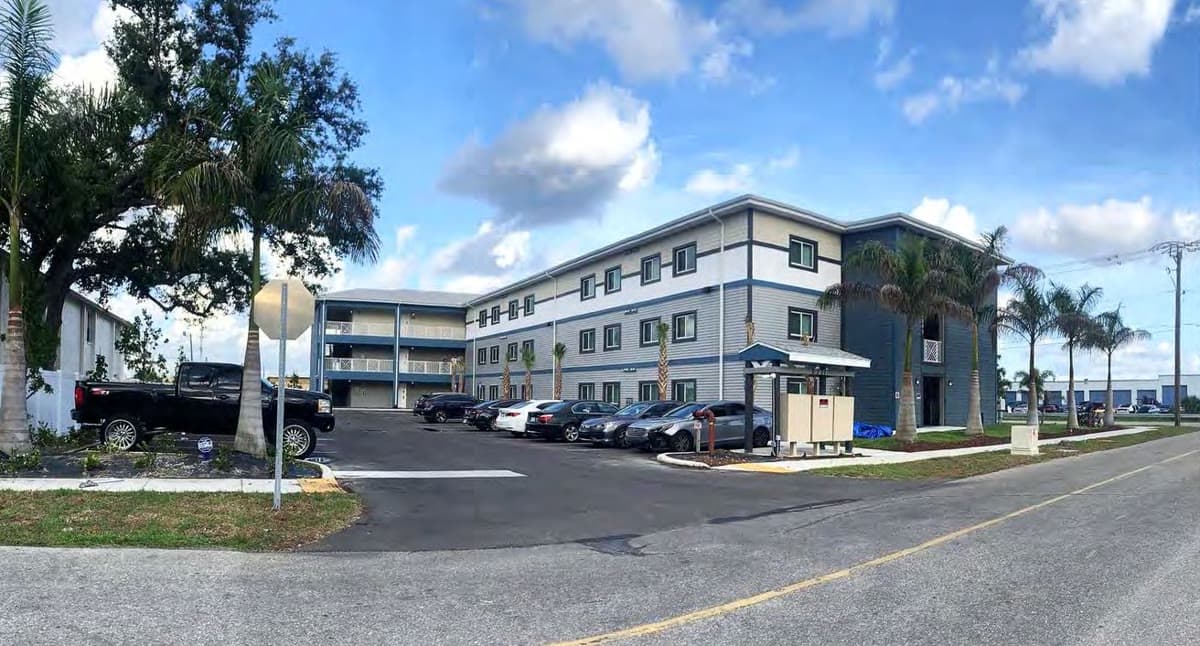
An 85%-occupied, value-add apartment building most lenders would only finance as expensive 10%+ bridge debt. We placed it as a permanent bank loan, negotiated the rate down, secured seller credits, and quarterbacked a complex commercial close to the wire.
The Challenge
A 2023-built, 33-unit asset bought out of a distressed-operations situation — depressed rents, deferred items, open permits, and five vacant units. The operator didn't want a bridge; he wanted permanent financing from a real bank — the cheapest, most durable money, and the hardest close in the business: a bank credit committee, an appraisal, title, and municipal permitting, all on one clock. Most lenders see the complexity and decline. We've owned deals like this — so we underwrote the asset, not just the credit box.
How We Closed It
We ran the entire process — sourcing, structuring, and a same-week agency-refinance plan for the exit:
- 1We shopped the deal to ~60 banks to find permanent terms most lenders wouldn’t offer on a value-add asset.
- 2We built the credit case — 30+ analyses and models — and packaged it for the bank, the appraiser, and the property manager.
- 3We negotiated the bank’s spread down from Treasury +300 to +250 bps — a 6.65% rate on a deal others priced as 10%+ bridge.
- 4We secured $70,250 in seller credits and a 12-month interest-only runway to lease up the vacant units.
- 5We quarterbacked the close — bank, title, two law firms, insurance — to fund on the purchase-and-sale contract.
The Operator Economics
A bank rate instead of a bridge rate changes the whole hold. On the $3,150,000 loan, permanent bank pricing saves an estimated ~$121,000 a year in interest versus typical bridge debt — and the 12-month interest-only period frees roughly $48,800 of year-one cash flow to lease up the vacant units. The asset was bought below replacement cost with rents well under market, leaving clear value-add upside as leases roll.
Illustrative: interest savings compare the 6.65% bank rate against typical 9.5–11% bridge pricing on $3.15M; not an actual alternative quote. Forward-looking figures are estimates only — every deal varies, and nothing here is a projection or guarantee.
The Deal at a Glance
130 calls
2,600+ texts · one point of contact
$70,250
in seller credits negotiated
Reflects a single funded business-purpose transaction; individual results vary. Rate, fee, and credit figures are drawn from the executed term sheet and signed closing statement; savings versus bridge are illustrative comparisons, not actual quotes or a guarantee. Names and street address withheld for privacy. Not a commitment to lend; all financing subject to credit approval, underwriting, and property qualification.
Download the PDF
Get the 2026 Multifamily Financing Playbook (PDF)
Twenty seconds of context and the download unlocks on this page.
Why 818 Capital
A Direct Lender and a Capital-Markets Desk, One Relationship
818 Capital lends on our own paper for DSCR, fix-and-flip, and short-term rental deals — and runs a capital-markets desk that places bank, agency, bridge, and CMBS/Life Co financing for multifamily and commercial sponsors. Every term sheet discloses which side of the desk it came from, so you always know exactly who you're borrowing from.
43+
Closed Deals
48
States
24hr
Sponsor Brief
AI
Scenario Analysis
Have a Multifamily Deal Right Now?
Submit your NOI and deal numbers and get an AI-powered Sponsor Brief — DSCR, debt yield, cap rate, and financing options compared, in 24 hours.
Get Your Sponsor BriefEducational only — not investment, tax, or legal advice. Not a commitment to lend; all financing subject to credit approval, underwriting, and property qualification.